
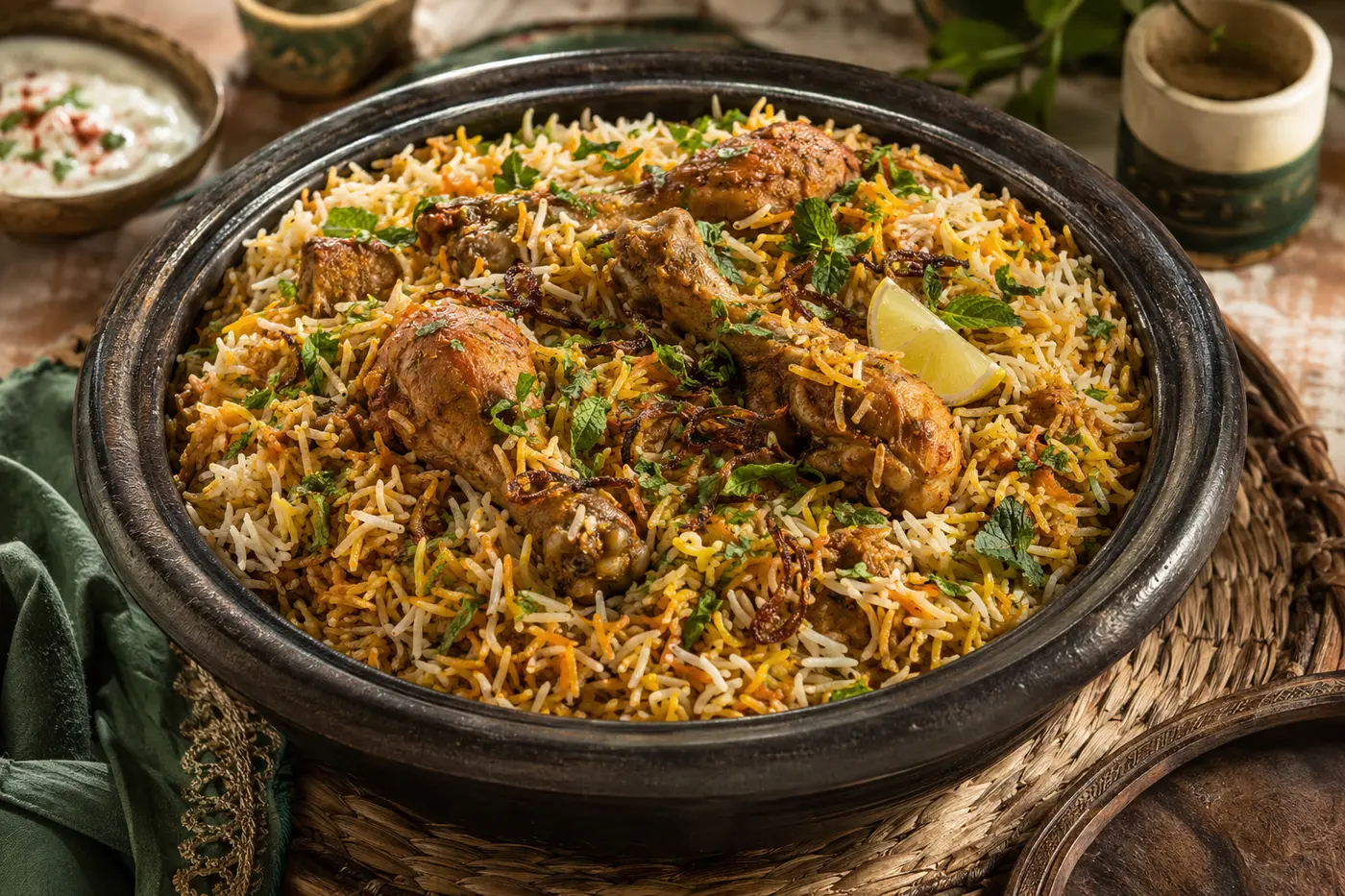
Biryani masala: the practical foundation
Biryani masala combines warm, earthy, hot and tangy spices to season the meat and perfume the rice during dum—the final stage in which the dish finishes cooking in trapped steam.
A good spice blend is only part of the result. Fragrant, evenly seasoned biryani depends on the amount of masala used, the moisture remaining in the meat base, the condition of the rice before layering and the heat used during dum.
Quick answerFor 1 kg of meat and 700–750 g of uncooked basmati rice, start with 1½ tablespoons of concentrated homemade masala and about 1 teaspoon of mixed whole aromatics. Boil the rice until a thin, firm white core remains. Reduce the meat masala until it coats the meat without becoming dry. For a prepared mix, follow the packet directions.
What is biryani masala?
Biryani masala is a blend developed for a layered rice-and-meat dish. Unlike a simple garam masala, it may combine aromatic spices with cumin, coriander, chilli and tangy ingredients.
It must be strong enough to flavour both meat and rice without making the dish bitter, excessively hot or heavily perfumed.
| Spice family | Examples | Purpose |
|---|---|---|
| Warm and aromatic | Cinnamon, cloves, cardamom, mace and nutmeg | Fragrance and warmth |
| Earthy and savoury | Cumin, coriander, fennel and shahi zeera | Body and depth |
| Hot | Red chilli, black pepper and green chilli | Heat and contrast |
| Tangy | Dried mango, anardana, dried plums, lemon and yoghurt | Acidity and balance |
Homemade masala or a prepared recipe mix?
Homemade masala gives you control over chilli, salt and aromatic intensity. Toasting whole spices shortly before grinding can produce a fresher fragrance.
A prepared recipe mix provides speed and consistency. It may already contain salt, chilli or other seasonings, so its packet instructions should take priority over a general ratio.
Neither option can compensate for overcooked rice or a watery meat base.
| Factor | Homemade | Prepared mix |
|---|---|---|
| Salt and chilli | Fully adjustable | Depends on formulation |
| Preparation | Measure, toast and grind | Ready to use |
| Aroma | Strongest when fresh | Consistent when stored correctly |
| Best for | Customising flavour | Quick, repeatable cooking |
Essential spices in biryani masala
Biryani should taste layered rather than simply hot. Each spice contributes a different part of the flavour.
Instructional visual: overhead photograph of the exact whole spices, individually labelled.
- Coriander seed provides rounded, citrus-like depth; cumin adds warm, earthy flavour.
- Green cardamom gives floral fragrance; black cardamom adds smoky depth.
- Cloves and cinnamon contribute concentrated warmth and woody sweetness.
- Black pepper creates dry heat; red chilli controls heat and colour.
- Mace is delicate and floral; nutmeg is intense and should be used sparingly.
- Star anise is liquorice-like; fennel is gently sweet; shahi zeera is delicate and earthy.
- Dried mango or anardana distributes acidity; dried plums create concentrated sweet-and-sour notes.
A practical homemade biryani masala blend
This makes approximately 5–6 tablespoons—enough for about three batches when using 1½ tablespoons per batch.
- Whole spices: 2 tbsp coriander seeds; 1 tbsp cumin seeds; 2 tsp fennel seeds; 1 tsp shahi zeera; 1 small cinnamon stick; 1 black cardamom pod; 5 green cardamom pods; 6 cloves; 1 small piece mace; ½ star anise; 1 tsp peppercorns; and a pinch of nutmeg.
- Ground spices: 1–2 tsp red chilli powder; 1 tsp turmeric; 1 tsp dried mango powder or ground anardana; and, if desired, 1 tsp mild chilli powder or paprika.
- Toast the whole spices in a dry, heavy pan over low heat for 2–3 minutes, stirring continuously. Remove as soon as fragrant.
- Cool completely, grind in short pulses and mix in the ground spices.
- Store in a clean, airtight container away from heat, moisture and sunlight. Smaller batches used within several weeks generally retain more aroma.
How much biryani masala should you use?
There is no universal ratio because blends vary in concentration. Some prepared mixes also include salt, chilli and acidic seasonings.
Before layering, the meat masala should taste slightly stronger than the desired finished dish because the rice will absorb and soften its seasoning.
The sauce should coat the back of a spoon. A finger drawn through it should leave a visible trail briefly; if liquid immediately fills the trail, continue reducing it.
For TAVAAZO Biryani Masala or another prepared mix, follow the packet instructions and check whether salt is already included.
- 1 kg chicken or mutton
- 700–750 g uncooked basmati rice
- About 1½ tbsp concentrated homemade masala
- About 1 tsp mixed whole aromatics
- 200–250 g yoghurt and 2 tbsp ginger garlic paste
- 2–3 onions and 2–3 tomatoes, depending on style
- A generous handful each of mint and coriander
How to recognise 70%-cooked rice
The physical test is more useful than the percentage. Aged basmati is commonly preferred because it tends to produce longer, more separate grains. Rinse and soak according to the package instructions.
Use a large pot with enough water for the grains to move freely. Season the water while considering salt already present in the meat masala or prepared mix.
Drain immediately when the rice reaches this stage. If you cannot layer it straight away, spread it over a wide tray to reduce carry-over cooking.
The 70% rice testRemove one grain and cool it briefly. Bite or press it between your fingers. The outside should be flexible and mostly cooked, but a thin, firm white core should remain. It should not be soft or translucent throughout.
Instructional visual: close-up comparison of undercooked, 70%-cooked and fully cooked basmati grains.
How to prepare a balanced meat masala
Bloom the whole spices briefly in hot oil or ghee. Cook sliced onions until properly golden—pale onions lack depth, while burned onions make the dish bitter.
Brown the meat lightly, then cook the ginger garlic paste until its raw smell disappears. Add ground masala and fry for about 30 seconds, stirring continuously, before adding yoghurt and tomatoes.
Chicken cooks faster than mutton. Tenderness and sauce consistency are better indicators than a fixed time.
A watery base produces soggy bottom rice; an excessively dry base can leave the upper rice bland.
- The meat is tender or nearly tender.
- The oil begins separating.
- The sauce coats the meat instead of running like soup.
- The spices and ginger garlic no longer smell raw.
- Enough moisture remains to steam and flavour the rice.
Condensed master recipe: Pakistani chicken biryani
For one working pot, use 1 kg bone-in chicken, 700–750 g basmati rice, 1½ tbsp homemade masala or a prepared mix according to its instructions, 200–250 g yoghurt, 2 tbsp ginger garlic paste, 3 onions, 2–3 tomatoes, 100–120 ml oil or ghee, 2 green chillies, mint, coriander, lemon, whole aromatics and salt as required.
Instructional visual: chicken masala at the bottom, partly cooked rice above, followed by mint, coriander and fried onion.
- Rinse and soak the rice according to its package instructions.
- Heat oil or ghee in a heavy pot. Add whole spices until aromatic.
- Fry onions until deep golden; reserve about one-third for layering.
- Add chicken and cook for 5–7 minutes. Add ginger garlic paste and cook until its raw aroma disappears.
- Add ground masala and fry for about 30 seconds, stirring continuously.
- Add yoghurt, tomatoes and green chillies. Cook until the chicken is nearly tender and the sauce coats it.
- Taste carefully. The masala should be slightly stronger than the desired final result.
- Boil the rice separately. Stop when each grain retains a thin, firm white core, then drain.
- Spread rice over chicken. Add mint, coriander, lemon and reserved fried onion.
- Cover tightly. Build steam over medium heat for 4–5 minutes, then use the lowest heat for about 12–20 minutes, depending on the pot and stove.
- Rest, covered, for 8–10 minutes. Lift and fold gently with a broad spoon.
Regional biryani styles
Regional and household recipes vary, but these broad characteristics provide a useful starting point.
| Style | Typical character | Cooking consideration |
|---|---|---|
| Sindhi | Spicy, tangy and aromatic; often dried plums, green chilli and potatoes | Reduce the bold masala properly |
| Bombay | Savoury and tangy with gently sweet notes | Keep sweetness subtle |
| Kolkata | Milder and aromatic; commonly potatoes and sometimes egg | Use rose water or kewra sparingly |
| Mutton | Deeper meat flavour and longer cooking | Nearly tender before layering |
| Pulao or pulao-biryani | More stock-led and integrated | Do not overpower the stock |
Common biryani problems and solutions
| Problem | Likely cause | Correction |
|---|---|---|
| Mushy rice | Overboiled rice or watery masala | Drain with a firm white core and reduce sauce |
| Raw spice smell | Spices or ginger garlic undercooked | Fry until the raw aroma disappears |
| Bland top | Masala too dry or uneven | Retain moisture and spread evenly |
| Dry biryani | Base too dry or dum heat too high | Retain sauce and seal the lid |
| Burned bottom | Thin pot or excessive heat | Use a heavy pot and low heat |
| Broken rice | Overcooking or aggressive stirring | Rest and lift gently |
Final biryani checklist
The spice blend supplies the aroma, but moisture control, rice timing, careful layering and patient dum turn it into a properly balanced biryani.
- The meat is tender or nearly tender.
- The masala coats the meat without being watery or dry.
- The rice still contains a thin, firm white core.
- The seasoning is slightly stronger than the desired final result.
- The ingredients are distributed evenly.
- The pot is tightly covered and ready for gentle heat.
Frequently asked questions
Can I make biryani masala in bulk?
Yes, but smaller batches usually retain aroma better. Store it airtight away from heat, moisture and sunlight.
What can replace mace?
Use a very small additional pinch of nutmeg or omit it. Too much nutmeg can dominate.
Can I leave out nutmeg?
Yes. It contributes background warmth but is not essential.
Why does my biryani smell raw?
The spices or ginger garlic may not have cooked long enough. Cook until the raw aroma disappears and oil begins separating.
Can I use the same ratio for chicken and mutton?
Use it as a starting point. Mutton generally needs longer cooking, and prepared mixes differ in concentration.
Can this masala be used for vegetable biryani?
Yes, but begin with less and adjust because vegetables differ in weight, moisture and cooking time.
How is biryani masala different from garam masala?
Garam masala is mainly aromatic. Biryani masala normally has a broader profile for rice and meat, often including coriander, cumin, chilli and tangy ingredients.